Event Survey Blog

Hidden Value of Event Surveys

Value of event surveys

From the start post-event surveys can be positioned to bring value from multiple directions. So the insights gained from one event payoff with improved event marketing and guest experiences at the next iteration of the event. Specifically, event survey ideas include using survey results as content to increase attendee and exhibitor registrations, or straight forward measures of satisfaction, or internal data to assess event strengths and areas that need refinement.

Survey Feedback as Content

Peer recommendations: Peer recommendations influence purchase decisions. Use the event survey to ask for open-end event feedback and use positive comments either anonymously or by name (with permission). As a result these comments become peer testimonials to use in marketing, on registration forms, email campaigns and social media posts. The peer messaging may influence potential attendees, exhibitors, and sponsors to convert into registered guests.

Proof of Return on Investment (ROI): Quantified attendee and exhibitor findings significantly enhance the marketing message to potential event participants. The sales and marketing team can confidently detail the reasons that buyers and exhibitors take part in the event. Event survey findings also capture broad measures of exhibitor sales or attendee purchases as a result of event participation. The quantified data may help to drive attendee and exhibitor registrations.

Convert at risk attendees and exhibitors into renewals: Today’s event surveys offer an opportunity for dissatisfied attendees and exhibitors to request contact with show management. If show management has the bandwidth to take on a new communications channel, this optional question may lead to two-way dialogue. It is a new point of contact that soothes negative sentiment and creates repeat event attendees and exhibitors.

Internal Survey Use

Logistics: The event survey is an opportunity to gather direct feedback on any aspect of the event. Find out the optimal duration of event hours, event location, time of year, etc. Test for recommendations and experiences with the registration process or pricing.

Satisfaction: The simplest questions about satisfaction may still be the staple of an event survey. What motivated attendees and exhibitors to participate in the event? How satisfied are they with the outcome? What caused satisfaction? What ideas or recommendations are there to increase satisfaction?

New concepts: For event managers, even those with a successful event, a key question is how to change or improve the event to avoid stagnation. Event managers may use the event survey to test new concepts or parse out the elements of the event that need retooling.


Today, event surveys are flexible tools that serve many purposes. Whether an event survey is for refining logistics or amplifying marketing, it is an important opportunity that event managers can leverage after any event. At Event Survey Group, our goal is to help clients design and deploy surveys that drive engagement, retention, and event growth.

Objectives and Key Results: Event and Membership Surveys

Objectives and Key Results: Event and Membership Surveys

Designing an event or membership survey around OKRs (Objectives and Key Results) is a structured approach that leads to more meaningful data collection and better-informed decision-making.

Many associations know they want the guidance that survey data can provide. OKRs are a solution that establishes a purpose-driven pathway. Survey objectives are identified, and the key results allow for continuous improvement and alignment with association goals.

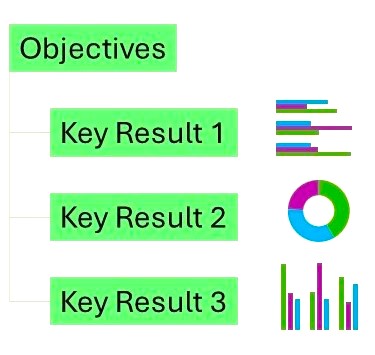
An excellent source to learn about OKRs is Whatmatters.com. OKRs are often written with an Objective followed by 3 to 5 supporting Key Results below it, according to whatmatters. Ideally the objectives are time sensitive, e.g., objectives measured for success or failure in the next quarter. An example for a membership survey may look like this:

Objective: “Increase understanding of member satisfaction to improve membership retention by 10% over the next year.”

Key Results:

  1. Achieve a 35% response rate from surveyed members.
  2. Identify the top three factors contributing to member satisfaction.
  3. Develop actionable insights to address areas of dissatisfaction identified by at least 40% of respondents.

Example Membership Survey Questions

When the association’s objective are known, and necessary results are identified, survey questions will have focus. The event or membership survey questions should align with the objectives and key results.

Survey questions to find the top three factors contributing to member satisfaction and actional insights to address member dissatisfaction may include the following:

Membership Survey Question: “On a scale of 1 to 10, how satisfied are you with your current membership?”

Membership Survey Question: “Please select the top three benefits you value most from your membership,

Answer option examples, networking opportunities, educational resources, exclusive member events, etc.

Membership Survey Question: “What improvements would you like to see in our membership services?”

Using Survey Results

Moving from a research tactic to executing on the survey findings is achievable with OKRs. The OKR provides the objective, and associations or event managers can measure their key results progress over time. It’s possible that as associations or event producers implement findings they will make adjustments to their plans until they find the optimal approach. Reviewing methods is common. Everyone working toward the same objective will make it clear what, if anything, needs to change to reach the objective.

In time, put the survey back in the field, annually or more often if it’s appropriate. Then improve the questionnaire with insights gained from tracking key results. The survey approach should be flexible to allow for adjustments in each iteration.

OKRs are a notable tactic to improve event or membership survey design. They offer an easy-to-use framework of defined goals and a means to measure success. By using OKRs, associations or event managers have a tool that keeps their surveys focused, and aligned with broader organizational goals.

Six Trends in Trade Show and Event Surveys

event survey trends

Event and trade show surveys have evolved to capture more nuanced feedback and insights from attendees.

Survey results are not simply a measure of past performance, it is a tool to inform future event planning. Events that seek a continuous improvement process use feedback to ensure that each trade show or event iteration addresses the concerns and preferences of its audience more effectively.

Overall, event survey trends mirror event producers’ needs to better understand attendee preferences and improve the overall event experience.

Here are some trends in event and trade show surveys:

1. Personalization and Customization

Surveys are becoming more personalized and customized to the individual attendee’s experience. This could involve dynamically adjusting survey questions based on attendee demographics or behavior, ensuring that the feedback collected is relevant and actionable.

2. Integration with Customer Relationship Management (CRM)

Survey data is being integrated with Customer Relationship Management (CRM) to create a more holistic view of attendee engagement and preferences. This allows organizers to personalize future communications, tailor marketing efforts, and nurture relationships with attendees beyond the event itself.

3. Shorter and More Targeted Surveys

Attendees are increasingly inundated with consumer and business surveys. To guard against survey fatigue, trade show and event surveys are becoming shorter and more targeted. Focus on specific aspects of the event experience instead of an attempt to cover everything in one lengthy questionnaire.

4. Real-Time Feedback

Complement a post-event survey with real-time feedback. Prompt attendees to provide feedback through mobile apps or QR codes during the event. This will capture their immediate impressions and experiences.

5. Integration of Multimedia and Visual Elements

Surveys are incorporating multimedia and visual elements to make them more engaging and interactive. This could include embedding videos, images, or interactive sliders to gather feedback in a more visually appealing and intuitive manner.

6. Net Promoter Score (NPS) and Sentiment Analysis

NPS and sentiment analysis are gaining prominence in trade show surveys as metrics for gauging attendee satisfaction and loyalty. Basically these metrics provide a concise measure of overall satisfaction and likelihood of recommendation. This allows organizers to quickly assess the event’s success and identify areas for improvement.